Hey there! As a supplier of Nylon Conductive Fiber, I often get asked a bunch of questions about this amazing product. One question that pops up quite a bit is, "What is the melting point of nylon conductive fiber?" Well, let's dive right into it and explore this topic in detail.
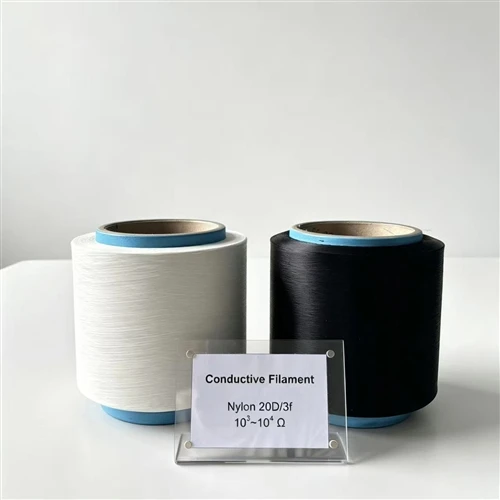
First off, let's understand what nylon conductive fiber is. Nylon itself is a well - known synthetic polymer. It's strong, durable, and has great abrasion resistance. When we talk about conductive fiber, we're adding a special property to the nylon. Conductive fibers can carry an electric current, which makes them super useful in a whole bunch of applications.
Now, the melting point of nylon conductive fiber isn't a one - size - fits - all number. It depends on a few factors. The type of nylon used is a big one. There are different types of nylon, like nylon 6 and nylon 6,6. Nylon 6 has a melting point that typically ranges from about 215°C to 225°C. On the other hand, nylon 6,6 has a higher melting point, usually between 250°C and 260°C.
But here's the thing. When we're dealing with nylon conductive fiber, the conductive component can have an impact on the melting point. The conductive materials added to the nylon, such as carbon nanotubes or metal particles, can either increase or decrease the melting point, depending on their properties. For example, if the conductive material has a high melting point and is well - integrated with the nylon matrix, it might raise the overall melting point of the fiber.
Another factor is the manufacturing process. The way the conductive material is incorporated into the nylon can also affect the melting point. If the mixing process is done at high temperatures or with certain additives, it can change the structure of the fiber and thus its melting characteristics.
Let's talk about why the melting point of nylon conductive fiber matters. In many applications, the fiber has to withstand certain temperatures. For instance, in the electronics industry, where these fibers are used for things like electromagnetic shielding, the fiber might be exposed to heat generated by electronic components. If the melting point is too low, the fiber could melt and lose its conductive properties, which would be a big problem.
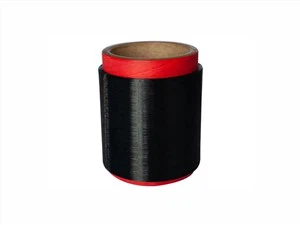
In the textile industry, nylon conductive fiber is used to make Textile Conductive Black Filament. These filaments are used in clothing, especially for anti - static purposes. When the clothes are washed or ironed, they are exposed to heat. Knowing the melting point helps ensure that the fiber doesn't get damaged during these processes.
We also have Polyester Conductive Fiber in our product range. Comparing it with nylon conductive fiber, polyester generally has a different melting point range. Polyester has a melting point around 250°C - 260°C, similar to nylon 6,6. But the conductive properties and other characteristics of these two fibers can vary, and the melting point is just one aspect to consider when choosing the right fiber for an application.
White Dyeable Antistatic Yarn is another product that contains nylon conductive fiber. The ability to dye the yarn is an important feature, and the melting point plays a role here too. The dyeing process often involves heating the yarn, and we need to make sure the fiber can handle the temperature without melting or losing its conductive and antistatic properties.


Now, let's discuss how we test the melting point of nylon conductive fiber. We use a method called differential scanning calorimetry (DSC). In this process, we heat a small sample of the fiber at a controlled rate and measure the amount of heat absorbed or released. When the fiber starts to melt, there's a characteristic peak in the DSC curve, and from that, we can determine the melting point.
It's also important to note that the melting point can change over time. Factors like exposure to chemicals, humidity, and mechanical stress can all affect the structure of the fiber and, in turn, its melting point. So, we regularly test our fibers to ensure they meet the required standards.
As a supplier, we take great pride in providing high - quality nylon conductive fiber. We have a team of experts who are constantly working on improving the product. We're always looking for ways to optimize the melting point and other properties to meet the diverse needs of our customers.
If you're in the market for nylon conductive fiber, whether it's for electronics, textiles, or any other application, we'd love to hear from you. We can provide you with samples so you can test the fiber in your specific environment. Our team can also offer technical support to help you choose the right fiber for your project.
In conclusion, the melting point of nylon conductive fiber is a complex but important characteristic. It depends on the type of nylon, the conductive material, and the manufacturing process. Understanding the melting point is crucial for ensuring the performance and durability of the fiber in various applications. So, if you have any questions or are interested in purchasing our nylon conductive fiber, don't hesitate to reach out. Let's have a chat and see how we can work together to meet your needs.
References
- "Introduction to Polymers" by Young and Lovell
- Research papers on conductive fibers from academic journals