What is the durability of textile conductive fiber?
In the ever - evolving world of textiles, conductive fibers have emerged as a revolutionary innovation. As a supplier of textile conductive fibers, I have witnessed firsthand the growing demand for these remarkable materials across various industries. But one question that often arises is: What is the durability of textile conductive fiber?
Understanding Textile Conductive Fiber
Textile conductive fibers are designed to conduct electricity while maintaining the essential properties of traditional textiles, such as flexibility, comfort, and processability. They are typically made by incorporating conductive elements like carbon, metal, or conductive polymers into the fiber structure. These fibers can be used in a wide range of applications, from smart clothing and wearable electronics to electromagnetic shielding and anti - static materials.
Factors Affecting the Durability of Textile Conductive Fiber
Mechanical Durability
One of the primary aspects of durability is mechanical strength. Textile conductive fibers are often subjected to various mechanical stresses during their lifecycle, including stretching, bending, and abrasion. For example, in smart clothing applications, the fibers need to withstand the normal movements of the human body. The mechanical properties of the base fiber and the conductive component play a crucial role here. Fibers with high tensile strength and good elasticity are more likely to maintain their conductivity under mechanical stress.
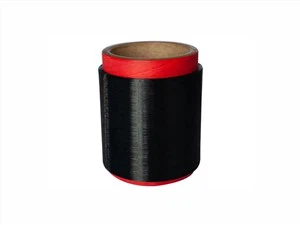
Carbon - based conductive fibers, such as 150D Carbon Conductive Polyester DTY, are known for their relatively high mechanical strength. The carbon component provides conductivity, while the polyester base offers good flexibility and durability. These fibers can endure repeated stretching and bending without significant loss of conductivity.
Chemical Durability
Textile conductive fibers may also be exposed to various chemicals during manufacturing, use, and cleaning. Chemicals such as detergents, solvents, and acids can potentially damage the conductive layer or the base fiber. For instance, in industrial applications where the fibers are used for electromagnetic shielding in chemical - rich environments, they need to resist chemical corrosion.
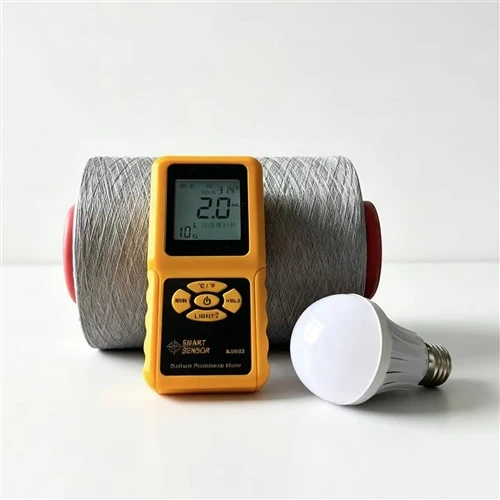
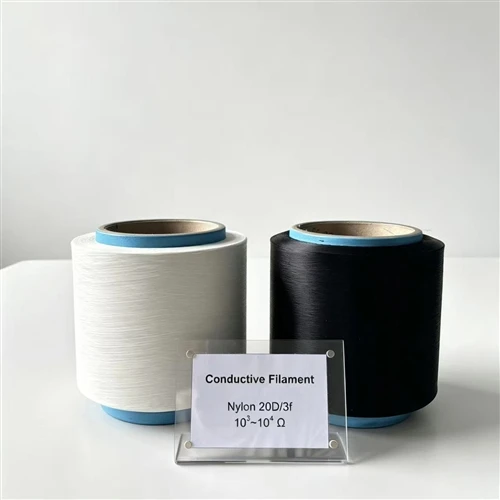
Conductive polymers, which are often used in textile conductive fibers, can be more sensitive to certain chemicals compared to metal - based or carbon - based conductors. However, proper surface treatments and encapsulation techniques can enhance their chemical durability. Our Textile Anti Static Conductive Fiber Filament is designed with chemical - resistant coatings to ensure long - term performance even in harsh chemical environments.
Environmental Durability
Environmental factors like temperature, humidity, and UV radiation can also impact the durability of textile conductive fibers. Extreme temperatures can cause thermal expansion and contraction, which may lead to cracking or delamination of the conductive layer. High humidity can promote oxidation of metal - based conductors, reducing their conductivity over time.
UV radiation can degrade the polymer matrix of the fiber, weakening its mechanical properties and potentially affecting the conductivity. To address these issues, we have developed fibers with enhanced environmental stability. Our Static Free Filament Yarn for Textile is treated to resist UV radiation and can maintain its performance in a wide range of temperatures and humidity levels.
Testing the Durability of Textile Conductive Fiber
To ensure the quality and durability of our textile conductive fibers, we conduct a series of rigorous tests.
Mechanical Testing
We use tensile testing machines to measure the tensile strength and elongation at break of the fibers. This helps us understand how the fibers will perform under stretching forces. Abrasion testing is also carried out using standardized methods to simulate the wear and tear the fibers may experience during use.
Chemical Testing
Fibers are exposed to various chemicals for a specified period, and their conductivity and mechanical properties are measured before and after the exposure. This allows us to evaluate the chemical resistance of the fibers and make necessary improvements to the manufacturing process.
Environmental Testing
We place the fibers in environmental chambers where temperature, humidity, and UV radiation can be controlled. By monitoring the conductivity and other properties over time, we can assess the long - term environmental durability of the fibers.
Applications and the Need for Durability
The durability of textile conductive fibers is of utmost importance in different applications.
Smart Clothing and Wearable Electronics
In smart clothing, the conductive fibers are used to integrate sensors, actuators, and communication devices. These fibers need to be durable enough to withstand the daily wear and tear of the clothing, including washing and ironing. If the fibers lose their conductivity due to poor durability, the functionality of the smart clothing will be compromised.
Electromagnetic Shielding
In industries such as aerospace and electronics, textile conductive fibers are used for electromagnetic shielding. The durability of these fibers ensures that the shielding effectiveness remains consistent over time, protecting sensitive electronic equipment from electromagnetic interference.
Anti - Static Applications
In environments where static electricity can cause safety hazards or damage to products, such as in the electronics manufacturing industry, anti - static conductive fibers are used. The durability of these fibers is essential to maintain a reliable anti - static effect, preventing electrostatic discharge.
Conclusion
The durability of textile conductive fiber is a complex concept that encompasses mechanical, chemical, and environmental aspects. As a supplier, we are committed to developing and producing high - quality conductive fibers with excellent durability. Our Static Free Filament Yarn for Textile, Textile Anti Static Conductive Fiber Filament, and 150D Carbon Conductive Polyester DTY are all designed to meet the diverse needs of our customers in terms of durability and performance.
If you are interested in our textile conductive fibers and would like to discuss your specific requirements or start a procurement negotiation, please feel free to reach out. We are eager to work with you to find the best solutions for your projects.


References
- "Conductive Textiles: Fundamentals and Applications" by Xungai Wang and Tao Jiang
- "Handbook of Smart Textiles and Wearables" edited by Maria Grazia Volpe and Maria Rosaria Palumbo
- Research papers on textile conductive fibers from leading academic journals such as Textile Research Journal and Journal of Applied Polymer Science