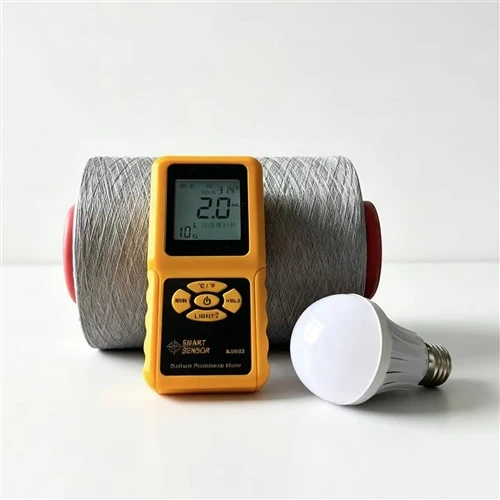
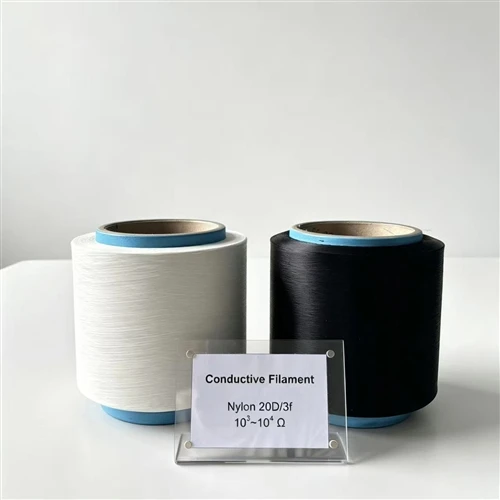
In the rapidly evolving landscape of materials science, fabric conductive fiber has emerged as a transformative innovation with far - reaching applications across various industries. As a leading supplier of Fabric Conductive Fiber, I am excited to delve into the mechanical properties of this remarkable material, shedding light on how these properties contribute to its diverse uses.
Tensile Strength
Tensile strength is a fundamental mechanical property that measures a material's ability to withstand pulling forces without breaking. Fabric conductive fibers are engineered to possess high tensile strength, which is crucial for their performance in different applications.

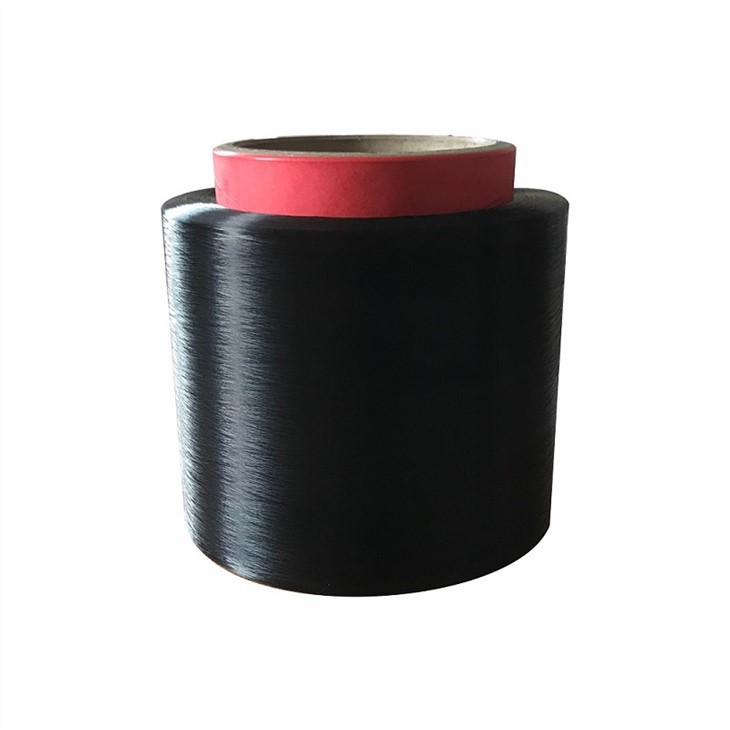
In the textile and wearable tech industries, for instance, high tensile strength ensures that the conductive fibers can endure the stresses of everyday wear and tear. The fiber must withstand stretching during movement, which is particularly important for Gloves Conductive Filament Yarn used in products like smart gloves. These gloves often need to maintain their electrical conductivity while also providing flexibility and durability. When a person flexes their hand or manipulates objects with the gloves on, the conductive fibers are subjected to repeated stretching. A fiber with low tensile strength would break easily, leading to a loss of conductivity and functionality.
Our Fabric Conductive Fiber is designed to have excellent tensile strength, allowing it to be incorporated into various textile structures such as woven, knitted, or non - woven fabrics. In woven fabrics, the fibers are interlaced at right angles, and high tensile strength ensures that the fabric maintains its integrity during production and use. The yarn can be threaded through looms at high speeds without breaking, facilitating efficient manufacturing processes.
Elongation at Break
Elongation at break refers to the maximum amount a material can stretch before it breaks. This property is closely related to the flexibility and durability of fabric conductive fibers. Conductive fibers with high elongation at break are more suitable for applications where the material needs to conform to different shapes or undergo significant deformation.
For Gloves Conductive Fiber, a high elongation at break is essential as it allows the gloves to fit snugly on hands of different sizes and shapes. When a person makes a fist or spreads their fingers, the conductive fibers need to stretch accordingly without losing their electrical conductivity. Our conductive fibers are formulated to have an optimal elongation at break, which not only provides comfort to the user but also ensures the long - term functionality of the smart gloves.
In addition to wearable applications, fabric conductive fibers with high elongation at break are also useful in flexible electronics. For example, they can be integrated into stretchable circuit boards or sensors. These components may need to bend, twist, or stretch during use, and the ability of the conductive fibers to adapt to such deformations is critical for the overall performance of the electronic device.
Flexural Rigidity
Flexural rigidity is a measure of a material's resistance to bending. In the context of fabric conductive fiber, a balanced flexural rigidity is required to meet different application needs.
In some cases, a lower flexural rigidity is preferred. For instance, in wearable technology, the conductive fibers should be soft and flexible enough to conform to the body's contours and allow natural movement. A low - rigidity fiber can be easily incorporated into clothing fabrics, ensuring that the end - product is comfortable to wear. Our Fabric Conductive Fiber is engineered to have a relatively low flexural rigidity, which makes it ideal for creating smart clothing that can be worn for extended periods without causing discomfort.
On the other hand, in certain applications such as in the manufacturing of electronic components that require a certain degree of structural support, a higher flexural rigidity may be necessary. The fiber needs to maintain its shape and resist bending under normal operating conditions. By carefully controlling the manufacturing process, we can adjust the flexural rigidity of our fabric conductive fibers to meet the specific requirements of different clients.
Abrasion Resistance
Abrasion resistance is another important mechanical property of fabric conductive fibers. In real - world applications, the fibers are often exposed to friction and rubbing against other surfaces, which can cause wear and tear over time.
In industrial settings, where conductive fabrics are used for electrostatic discharge (ESD) protection, abrasion resistance is crucial. The fabric needs to maintain its conductivity even after repeated rubbing and contact with rough surfaces. Our fabric conductive fibers are treated with special coatings and additives to enhance their abrasion resistance. This ensures that the ESD - protective fabrics can be used for an extended period without losing their electrical properties.
In the case of wearable products like smart clothing and gloves, abrasion resistance is also vital. The fibers need to withstand the friction generated by daily activities such as washing, sitting, and moving. A high - abrasion - resistant conductive fiber will ensure that the product has a long lifespan, providing reliable performance over time.
Compression Resistance
Compression resistance is the ability of a material to withstand compressive forces without losing its properties. Fabric conductive fibers with good compression resistance are important in applications where the material is subjected to pressure.
For example, in pressure - sensing applications, the conductive fibers need to maintain their electrical conductivity even when compressed. When the fiber is compressed, the contact between the conductive particles within the fiber changes, which can potentially affect the conductivity. Our fabric conductive fibers are designed to have excellent compression resistance, ensuring stable electrical performance under pressure. This property makes them suitable for use in applications such as pressure - sensitive mats and tactile sensors.
Impact of Manufacturing Process on Mechanical Properties
The mechanical properties of fabric conductive fibers are significantly influenced by the manufacturing process. Different production methods can result in fibers with varying degrees of tensile strength, elongation at break, and other properties.
For instance, the choice of raw materials plays a crucial role. We carefully select high - quality conductive polymers and fillers to ensure the desired mechanical and electrical properties of our fibers. The ratio of these components in the fiber can be adjusted to optimize the performance.
The spinning process also affects the mechanical properties of the fiber. The speed, temperature, and tension during spinning can impact the fiber's orientation and structure, which in turn affects its strength and flexibility. Our advanced spinning technology allows us to precisely control these parameters, resulting in fabric conductive fibers with consistent and excellent mechanical properties.
Conclusion and Call to Action
In conclusion, the mechanical properties of fabric conductive fiber, including tensile strength, elongation at break, flexural rigidity, abrasion resistance, and compression resistance, are all essential for its performance in various applications. As a leading supplier of Fabric Conductive Fiber, we have dedicated ourselves to developing fibers with optimal mechanical properties to meet the diverse needs of our clients.
Whether you are in the wearable technology industry, industrial manufacturing, or any other sector that requires conductive materials, our fabric conductive fibers offer a reliable and high - performance solution. If you are interested in exploring the potential of our products for your specific applications, I invite you to reach out to us for a detailed discussion. We can provide samples for testing and work closely with you to customize the fibers according to your requirements.
References
- Ashida, K., & Takai, M. (2005). Conductive polymers and their applications. Electrochimica Acta, 50(23 - 24), 4817 - 4826.
- Lau, K. T., & Hui, D. (Eds.). (2003). Handbook of carbon fibers and their composites. Woodhead Publishing.
- Mamedov, A. A., Kotov, N. A., Prato, M., Guldi, D. M., Wicksted, J. P., & Hirsch, A. (2002). Molecular design of strong single - walled carbon nanotube/polyelectrolyte multilayer composites. Nature Materials, 1(3), 190 - 194.