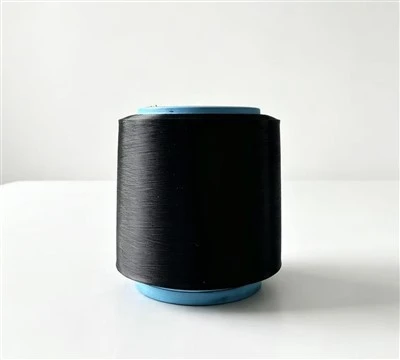
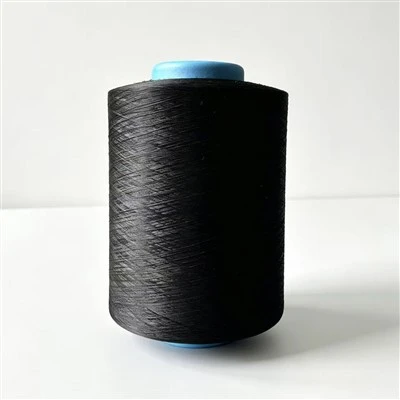
Conductive Yarn for ESD Workwear & Cleanroom
Product Types
Conductive Yarn Types by Application
Six yarn subtypes engineered for specific industrial applications. Each type is optimized for resistivity range, mechanical strength, and textile process compatibility.
-
![Nylon Conductive Fibers N96-20D-3F]() Nylon Conductive Fibers N96-20D-3FN96-20D-3FNylon Conductive Fibers ,Multi Filament,Black colorAnti-static Yarn, ESD
Nylon Conductive Fibers N96-20D-3FN96-20D-3FNylon Conductive Fibers ,Multi Filament,Black colorAnti-static Yarn, ESD -
![Polyester Cnductive Fibers B96-20D-1F]() Polyester Cnductive Fibers B96-20D-1FB96-20D-1FPolyester Conductive Fibers ,Multi Filament,Black ColorAnti-static Yarn, ESD Fabric
Polyester Cnductive Fibers B96-20D-1FB96-20D-1FPolyester Conductive Fibers ,Multi Filament,Black ColorAnti-static Yarn, ESD Fabric -
![Nylon Conductive Fibers N96-40D-6F]() Nylon Conductive Fibers N96-40D-6FN96-40D-6FNylon Conductive Fibers ,Multi Filament,Black colorAnti-static Yarn, ESD
Nylon Conductive Fibers N96-40D-6FN96-40D-6FNylon Conductive Fibers ,Multi Filament,Black colorAnti-static Yarn, ESD -
![Polyester Cnductive Fibers B96-40D-6F]() Polyester Cnductive Fibers B96-40D-6FB96-40D-6FPolyester Conductive Fibers ,Multi Filament,Black ColorAnti-static Yarn, ESD Fabric
Polyester Cnductive Fibers B96-40D-6FB96-40D-6FPolyester Conductive Fibers ,Multi Filament,Black ColorAnti-static Yarn, ESD Fabric -
![Polyester Cnductive Fibers B96-50D-6F]() Polyester Cnductive Fibers B96-50D-6FB96-50D-6FPolyester Conductive Fibers ,Multi Filament,Black ColorAnti-static Yarn, ESD Fabric
Polyester Cnductive Fibers B96-50D-6FB96-50D-6FPolyester Conductive Fibers ,Multi Filament,Black ColorAnti-static Yarn, ESD Fabric -
![Polyester Cnductive Fibers B96-150D-48F]() Polyester Cnductive Fibers B96-150D-48FB96-150D-48FPolyester Conductive Fibers ,Multi Filament,Black ColorAnti-static Yarn, ESD Fabric
Polyester Cnductive Fibers B96-150D-48FB96-150D-48FPolyester Conductive Fibers ,Multi Filament,Black ColorAnti-static Yarn, ESD Fabric -
![Polyester Cnductive Fibers B96-20D-3F]() Polyester Cnductive Fibers B96-20D-3FB96-20D-3FPolyester Conductive Fibers ,Multi Filament,Black ColorAnti-static Yarn, ESD
Polyester Cnductive Fibers B96-20D-3FB96-20D-3FPolyester Conductive Fibers ,Multi Filament,Black ColorAnti-static Yarn, ESD -
![Nylon Conductive Fibers N68-20D-3F]() Nylon Conductive Fibers N68-20D-3FN68-20D-3FNylon Conductive Fibers ,Multi Filament,White colorAnti-static Yarn, ESD
Nylon Conductive Fibers N68-20D-3FN68-20D-3FNylon Conductive Fibers ,Multi Filament,White colorAnti-static Yarn, ESD -
![Polyester Conductive Fibers B68-20D-3F]() Polyester Conductive Fibers B68-20D-3FB68-20D-3FPolyester Conductive Fibers ,Multi Filament,White colorAnti-static Yarn, ESD
Polyester Conductive Fibers B68-20D-3FB68-20D-3FPolyester Conductive Fibers ,Multi Filament,White colorAnti-static Yarn, ESD -
![Nylon Conductive Filament 20D for Textile]() Nylon Conductive Filament 20D for TextileSpecification: 20D3F、40D6F、80D12F. Substrate: Nylon. Conductive Particle: Carbon. Color: Black. Strength cN/dtex: 2.0~3.0.
Nylon Conductive Filament 20D for TextileSpecification: 20D3F、40D6F、80D12F. Substrate: Nylon. Conductive Particle: Carbon. Color: Black. Strength cN/dtex: 2.0~3.0. -
![70D Nylon Conductive Carbon DTY]() 70D Nylon Conductive Carbon DTYSpecification: 70D24f DTY. Substrate: Nylon. Conductive Particle: Carbon. Color: Black. Strength cN/dtex: 2.0~3.0.
70D Nylon Conductive Carbon DTYSpecification: 70D24f DTY. Substrate: Nylon. Conductive Particle: Carbon. Color: Black. Strength cN/dtex: 2.0~3.0. -
![White Dyeable Antistatic Yarn]() White Dyeable Antistatic YarnSpecification: 20D3F. Substrate: Polyester. Conductive Particle: Carbon. Color: White. Antistatic Performance Ω/cm: 10^10.
White Dyeable Antistatic YarnSpecification: 20D3F. Substrate: Polyester. Conductive Particle: Carbon. Color: White. Antistatic Performance Ω/cm: 10^10.


What Is Conductive Yarn
Conductive yarn is a textile structure in which conductive particles or filaments are integrated into the yarn body to provide a continuous electrical conduction path along the yarn axis. In carbon black conductive yarns, conductive-grade carbon black (particle size 20–40 nm, DBP absorption >150 mL/100g) is either blended into the polymer matrix before spinning (uniform dispersion type) or confined to the core layer of a sheath-core bicomponent filament (core-sheath type).
The conductive path is formed by the percolation network of carbon black particles. When the carbon black loading exceeds the percolation threshold (typically 15–30 wt% depending on structure and dispersibility), inter-particle contact produces a sudden drop in volume resistivity by 6–10 orders of magnitude.
Unlike topical anti-static treatments that rely on humidity-dependent ionic conduction, carbon black yarns provide permanent conductivity independent of relative humidity, down to ≤30% RH. This is the determining factor for applications in climate-controlled cleanrooms and heated industrial environments.
Technical Data SheetTechnical Parameters
Engineering Specification Data
All parameters are measured under standard conditions (23°C, 50% RH) unless otherwise specified. Custom specifications available on request.
| Parameter | Test Method | Unit | Typical Range | Remarks |
|---|---|---|---|---|
| Surface Resistivity | EN 1149-3 | Ω | 10⁴ – 10⁸ | Dependent on carbon loading |
| Volume Resistivity | ASTM D991 | Ω·cm | 10² – 10⁶ | Core-sheath: core only |
| Line Resistance | Four-point probe | Ω/cm | 10² – 10⁵ | Inversely proportional to denier |
| Carbon Dispersion | SEM cross-section | CV % | <15% | CV >20%: inadequate |
| Carbon Content | TGA (600°C) | wt% | 15 – 32% | Optimal 20–28% (PET) |
| Breaking Tenacity | ASTM D2256 | cN/dtex | 1.8 – 3.2 | Sheath determines tenacity |
| Breaking Elongation | ASTM D2256 | % | 15 – 45 | PA: higher; PET: lower |
| Resistivity @ -40°C | EN 1149-3 | Ω | Within 1 order | PTC effect minimal |
| Resistivity @ +150°C | EN 1149-3 | Ω | Within 2 orders | Above Tg, resistivity increases |
| Wash Durability | EN 1149-3, 75°C | Resist. change | <1 order | Core-sheath: superior |
| Moisture Absorption | ISO 62 | wt% | 0.2 – 0.6% | Carbon reduces moisture pickup |
| Shrinkage @ 180°C | ASTM D4974 | % | 2 – 8% | Heat-set: improved stability |
Applications
Industrial Application Scenarios
Carbon black conductive yarns are deployed across industries where electrostatic discharge poses operational risk or product quality issues.
Comparison
Conductive Yarn vs. Alternative Technologies
Engineering comparison of conductive yarn technologies for textile anti-static applications.
| Property | Carbon Black Yarn | Stainless Steel Yarn | Silver-Coated Yarn |
|---|---|---|---|
| Surface Resistivity | 10⁴ – 10⁸ Ω | 10² – 10⁴ | 10² – 10⁵ |
| Wash Durability | >100 cycles (permanent) | Unlimited | 50–100 (degradation) |
| Low Humidity (≤30% RH) | Stable | Stable | Stable |
| Textile Processability | Excellent | Poor (high breakage) | Good |
| Tenacity (cN/dtex) | 1.8 – 3.2 | 8 – 15 | 1.5 – 2.8 |
| Elongation at Break | 15 – 45% | 1 – 3% | 15 – 35% |
| Particle Shedding | Low / Moderate | None | None |
| Color Options | Black/dark only | Silver-grey only | Can be over-dyed |
| Cost Index | 1.0 (baseline) | 1.8 – 2.5 | 5.0 – 8.0 |
Procurement & Engineering Questions
Technical answers for procurement engineers and textile technical teams.
Request Technical Documentation
Download data sheets, request samples, or consult our engineering team for custom specifications.
Haining Taierxin New Materials Co., Ltd. is one of the most professional conductive fiber manufacturers and suppliers in China, specialized in providing high quality products. We warmly welcome you to wholesale bulk conductive fiber at competitive price from our factory.
carbon fibre nylon filament, conductive fiber black filament for dust repellent, nylon with carbon fiber filament