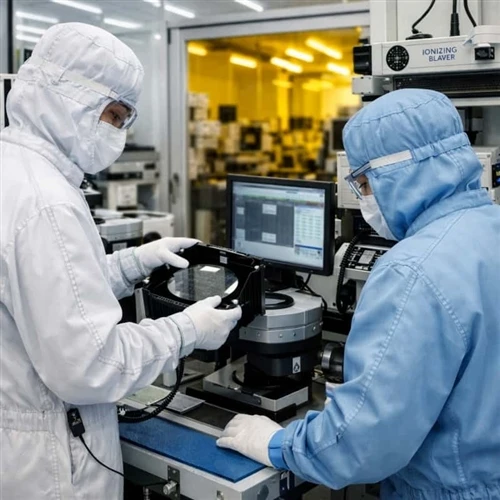
The use of conductive fibers is the basic direction of the development of antistatic technology for textile materials. From the application experience at home and abroad, coated and composite organic conductive fibers are most suitable for preparing permanent antistatic textiles. From the perspective of the demand characteristics of the antistatic function of textile products, conductive fibers should focus on the development of two categories: the first category, the metal compound composite white high-conductivity organic conductive fiber that meets the needs of various dyeing properties of civil textiles; the second category, the adaptation Special functional textiles (such as dust-free, sterile and explosion-proof work clothes, electromagnetic shielding fabrics, etc.) need carbon black coating or carbon black composite high-conductivity organic conductive fibers. As an important class of smart materials, conductive fibers have attracted widespread attention from the material circles at home and abroad. Their research and development are in the ascendant, and they have good application prospects in clothing, sensors and industrial textiles. It is believed that with the advancement of science and technology, smart materials will continue to develop. As one of the main varieties of smart textiles, conductive fibers will surely gain an increasingly important position in the field of materials. Although the manufacturing cost of conductive fiber is high, its mixing ratio in the fabric is small, the effect is obvious, and it has extremely broad development prospects for civil and industrial use. In the current research and development of differentiated fibers in my country, conductive fibers should occupy an important position, and attention should be paid to their development. It can be studied in the following areas: (1) How to strengthen the research on the modification of conductive fillers under the premise of improving the conductive properties of conductive fibers, so as to reduce the amount of conductive fillers, increase dispersibility and orientation, and reduce specific gravity. (2) While increasing the amount of conductive filler to improve the conductive function, the mechanical properties and other properties of the fiber are enhanced. (3) Reduce the cost of preparation and processing of conductive fibers. (4) Improve the molding process and product appearance of conductive fibers. (5) Improve comprehensive use performance, ensure that the processability of the conductive fiber meets the requirements of green chemistry, conform to the national scientific development strategy, and make its technology practical, so that it can be applied on a large scale.
 English
- English
- 日本語
- 한국어
- Français
- Deutsch
- Español
- Italiano
- Português
- Việt Nam
- Türkçe
- عربي
- русский
- 简体中文
- Čeština
- ไทย
- Eesti
- Gaeilgenah Éireann
- Bai Miaowen
- íslenska
- Cymraeg
- Български
- اردو
- Polski
- hrvatski
- українська
- bosanski
- فارسی
- Lietuvių
- Latviešu
- עברית
- România limbi
- Ελληνικά
- dansk
- magyar
- Norsk
- suomi
- Nederlands
- Svenska
- slovenčina
- slovenščina
- हिंदी
- Indonesia
- Melayu
- Malti
- Kreyòl Ayisyen
- Català
- বাংলা
- Srbija jezik (latinica)
- O'zbek