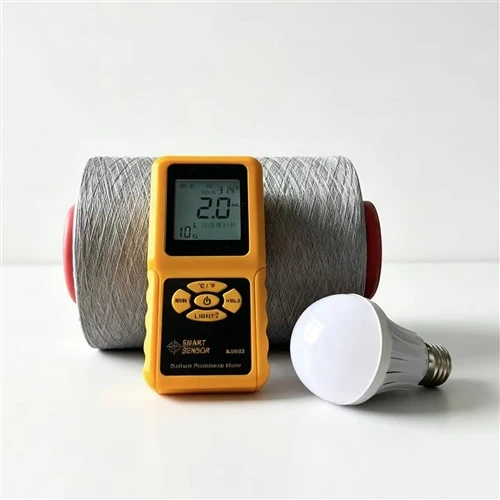
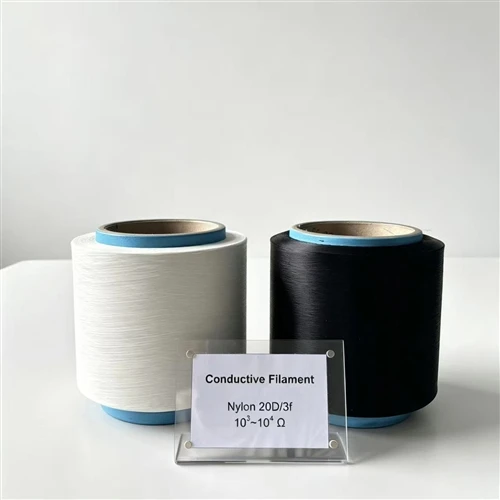
As industrial safety standards continue to evolve across global manufacturing sectors, polyester anti-static yarn has become an essential material in the production of functional textiles and electrostatic discharge (ESD) protection products. From cleanroom garments and electronic manufacturing uniforms to smart textiles and industrial fabrics, anti-static yarn plays a critical role in reducing electrostatic hazards and improving workplace safety.
Among the many performance indicators used to evaluate anti-static materials, anti-static charge density is one of the most important technical parameters. Understanding how anti-static charge density works helps manufacturers, textile engineers, and overseas buyers select the right conductive yarn solution for their applications.
This article explains the concept of anti-static charge density, the working mechanism of polyester anti-static yarn, the factors affecting static dissipation performance, and the growing industrial demand for advanced anti-static textile materials.
What Is Anti-Static Charge Density?
Anti-static charge density refers to the amount of electrostatic charge that can accumulate on a material per unit area or volume. In simple terms, it measures how effectively a material can resist or dissipate static electricity.
When two surfaces rub against each other, electrons are transferred from one surface to another, creating static charges. If these charges cannot dissipate quickly, static electricity builds up and may result in:
Electrostatic discharge (ESD)
Dust attraction
Electric shocks
Damage to electronic components
Fire or explosion risks in sensitive environments
A lower anti-static charge density means the material can dissipate static charges more efficiently, reducing the risk of static-related problems.
For polyester anti-static yarn, maintaining a low charge density is essential for ensuring reliable anti-static performance in industrial and textile applications.
Why Static Electricity Is a Serious Industrial Problem
Static electricity is a common but often underestimated issue in many industries.
In environments such as:
Electronics manufacturing
Semiconductor production
Petrochemical plants
Pharmaceutical facilities
Cleanrooms
Textile factories
even a small electrostatic discharge can lead to significant operational and safety risks.
Static buildup can:
Damage sensitive electronic devices
Interfere with production equipment
Attract airborne particles and dust
Reduce product quality
Create ignition risks in flammable environments
As industries become more technologically advanced, effective static control materials are increasingly important.
How Polyester Anti-Static Yarn Works
Polyester anti-static yarn is specially engineered to dissipate electrostatic charges before they accumulate to dangerous levels.
The yarn is produced by integrating conductive materials into polyester fiber structures. These conductive components create pathways that allow static charges to move safely away from the fabric surface.
Common conductive materials used include:
Carbon conductive particles
Stainless steel fibers
Conductive polymers
Carbon nanotubes
Metallic coatings
The conductive network inside the yarn helps maintain low surface charge density by continuously dissipating electrical charges into the surrounding environment.
This process greatly reduces the risk of sudden electrostatic discharge.
The Relationship Between Surface Resistance and Charge Density
One of the key indicators used to evaluate anti-static yarn performance is surface resistance.
Surface resistance measures how easily electrical current can move across the material surface.
Generally:
Lower surface resistance = better conductivity
Better conductivity = lower static charge accumulation
Lower charge density = stronger anti-static performance
Anti-static textile materials typically fall within specific resistance ranges depending on the application requirements.
For example:
ESD-safe garments require controlled conductivity
Touch screen gloves require higher conductivity
Industrial protective fabrics require stable static dissipation
Proper balance between conductivity and resistance is essential for achieving safe and stable anti-static performance.
Environmental Factors Affecting Anti-Static Charge Density
The anti-static performance of polyester conductive yarn can be influenced by environmental conditions.
Humidity
Humidity plays a major role in static electricity behavior.
In dry environments:
Static electricity builds up more easily
Charge dissipation becomes more difficult
Anti-static materials must work harder
In humid environments:
Moisture helps conduct static charges away
Static buildup is reduced naturally
Anti-static yarn performs more efficiently
This is why static control is particularly important in low-humidity production environments.
Temperature
Temperature can also influence conductive material performance and electrostatic behavior.
Extreme temperatures may affect:
Fiber conductivity stability
Surface resistance
Durability of conductive coatings
High-quality polyester anti-static yarn is designed to maintain stable performance under varying industrial conditions.
Applications of Polyester Anti-Static Yarn
Anti-Static Protective Clothing
One of the most important applications of polyester anti-static yarn is the production of ESD protective garments.
Industries such as electronics manufacturing and cleanroom operations require workers to wear anti-static clothing that minimizes electrostatic discharge risks.
Common products include:
Cleanroom suits
Anti-static lab coats
ESD uniforms
Safety gloves
Protective footwear
Low charge density fabrics help prevent dust attraction and protect sensitive equipment from electrostatic damage.
Touch Screen Gloves
Conductive yarn is widely used in touch screen gloves.
Capacitive touch screens require conductive contact between the user's finger and the screen surface. Conductive yarn integrated into glove fingertips allows electrical signals to pass through the fabric.
Applications include:
Industrial work gloves
Winter touch screen gloves
Smart wearable accessories
Consumer electronics gloves
Stable conductivity and controlled resistance are essential for accurate touch sensitivity.
Composite Anti-Static Yarn
Composite anti-static yarn combines conductive fibers with other textile materials to achieve enhanced durability, flexibility, and performance.
Benefits include:
Improved mechanical strength
Better wear resistance
Enhanced textile compatibility
Stable conductivity performance
Composite yarn is commonly used in:
Industrial fabrics
Smart textiles
Automotive materials
Protective uniforms
Smart Textiles and Functional Fabrics
The development of wearable technology and smart textiles has created new opportunities for conductive yarn applications.
Modern conductive fabrics may include:
Health monitoring sensors
Flexible circuits
Interactive garments
Heating textiles
Motion sensing systems
Low charge density and stable electrical properties are critical for ensuring reliable smart textile performance.
How Manufacturers Test Anti-Static Yarn Performance
Professional conductive yarn manufacturers use strict testing procedures to ensure stable anti-static performance.
Common testing methods include:
Surface resistance testing
Static decay testing
Charge density measurement
Conductivity evaluation
Durability testing
Environmental stability testing
These tests help verify that the yarn can maintain effective electrostatic control during long-term industrial use.
Choosing the Right Polyester Anti-Static Yarn
When selecting anti-static yarn, buyers should evaluate several factors beyond charge density alone.
Important considerations include:
Conductivity Performance
Different applications require different conductivity levels.
Durability
Industrial environments demand strong abrasion resistance and long-term stability.
Textile Compatibility
The yarn must integrate effectively into weaving, knitting, or coating processes.
Cost Efficiency
Buyers should balance performance requirements with overall production costs.
Customization Capabilities
Many manufacturers require customized yarn specifications, colors, or resistance ranges.
Why Overseas Buyers Choose Taierxin Fiber
For overseas buyers looking for reliable conductive yarn and anti-static textile suppliers, Taierxin Fiber has become a trusted manufacturer in the global functional textile industry.
Taierxin Fiber specializes in polyester anti-static yarn, conductive fibers, composite anti-static yarn, and advanced textile conductive materials designed for industrial, electronic, and cleanroom applications.
The company offers a wide range of products including:
Polyester anti-static yarn
Composite anti-static yarn
Conductive yarn for touch screen gloves
Textile conductive filament yarn
ESD garment yarn solutions
Carbon conductive fibers
One of the major advantages of Taierxin Fiber is its strong focus on product consistency and customized production capabilities. The company supports different conductivity levels, yarn specifications, resistance requirements, and textile compatibility needs for overseas customers.
With advanced manufacturing technology and strict quality control systems, Taierxin Fiber provides stable anti-static performance, excellent durability, and reliable electrostatic protection for global textile manufacturers and industrial buyers.
For importers, garment factories, cleanroom suppliers, and industrial fabric producers, Taierxin Fiber offers flexible OEM/ODM services and professional technical support, making it a valuable long-term partner in the anti-static textile market.
Future Trends in Anti-Static Textile Materials
As industries continue to adopt automation, smart manufacturing, and electronic integration, demand for advanced anti-static textile materials will continue to grow.
Future developments may include:
Smart conductive fabrics
AI-integrated wearable systems
Sustainable conductive fibers
Ultra-lightweight ESD textiles
Multifunctional industrial fabrics
Manufacturers capable of combining stable conductivity, low charge density, durability, and textile flexibility will remain highly competitive in the global market.
Conclusion
Anti-static charge density is one of the most important performance indicators for polyester anti-static yarn. It directly affects how efficiently the material can dissipate electrostatic charges and prevent static-related hazards.
Through the integration of conductive materials and advanced manufacturing technologies, modern polyester anti-static yarn provides reliable electrostatic protection for industries ranging from electronics and cleanrooms to wearable technology and industrial safety textiles.
As global demand for functional textiles continues to rise, companies like Taierxin Fiber are helping overseas buyers access high-quality conductive yarn solutions with stable performance, customized specifications, and professional technical support for next-generation textile applications.