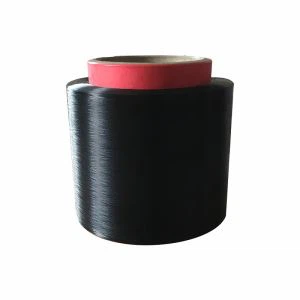
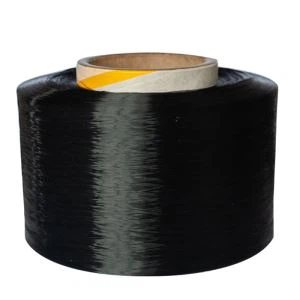
Haining Taierxin New Materials Co., Ltd. is one of the most reliable manufacturers and suppliers of electronic textiles conductive filament in China. Please feel free to wholesale high quality electronic textiles conductive filament made in China here from our factory. Welcome to view our website for more information.
Specification | 20D3F、70D27F、200D66F |
Substrate | Polyester、nylon |
Conductive Particle | Carbon |
Color | Black、Grey |
Strength cN/dtex | 2.0~3.0 |
Elongation | 50~80% |
Antistatic Performance Ω/cm | 10^5 |
Advantages of electronic textiles conductive filament | Static-free, Cling-free, Hair-repellent, Dust-repellent, Chemical-free, Meets anti-static specs & other requirements, Meets all surface resistivity & static decay test requirements. |
Certifications | ISO 9001 certified |
Application
● Uniforms: high-grade anti-static dust-proof uniforms, military uniforms, police uniforms, suits, school uniforms, etc.
● Tooling category: flammable and explosive industries such as petroleum, chemical, and mining
● Clean category: dust-free environment for electronics factories, aerospace, laboratories, pharmaceuticals, etc.
● Products: conductive silk, warp knitted gloves, electrostatic brush, wristband, gloves, anti-static yarn card, line card, etc.
● Home category: anti-static worsted wool, cashmere sweater, chemical fiber skirt, pants, carpet, blanket, sweater, rag, etc.
● Other: anti-static filter felt, non-woven fabric, mountaineering suit, car fabric, health care apparel, anti-static yarn.
The dyeability of conductive yarns
According to the different materials of conductive fiber, conductive yarn can be divided into two categories: dyeable and non-dyeable.
1. Non-dyeable conductive fiber
Metal (including metal plating), organic carbon black, polymer intrinsic conductive fiber
2. Dyeable conductive fibers
An organic composite metal compound-based conductive fiber (ie, a white conductive fiber). The dyeing properties are different depending on the substrate used.
The dyeing properties of the conductive fiber of the polyester-based organic composite metal compound are the same as those of the polyester fiber. Polyester is acid and alkali resistant, and has good heat resistance and thermal stability. Polyester macromolecules are rigid linear molecules with high crystallinity, small inter-molecular voids, poor fiber hygroscopicity, little expansion in water, and lack of polar groups in the chemical structure of fibers. Therefore, polyester is commonly used as a disperse dye. Dyeing at high temperature and pressure around 130 °C.
The dyeing properties of nylon-based organic composite metal compound conductive yarns are the same as those of nylon fibers. Nylon is resistant to alkali and is not resistant to acid. Its heat resistance and thermal stability are not as good as polyester, but its dyeability is better than that of polyester. It can be dyed with acid dyes, disperse dyes and other dyes.
In the acidic medium, the nylon macromolecule has a cationic property, and an anionic dye can be used;
In alkaline media, nylon macromolecules have a labyrinth and cationic dyes can be used.
Strong oxidants can destroy the molecular structure of nylon fiber, such as: bleaching powder, sodium hypochlorite, hydrogen peroxide, etc. can cause the molecular chain of nylon to break, so that the fiber strength is reduced, and the nylon is easy to turn yellow after bleaching with these oxidants, so if When bleaching is required, sodium chlorite (Naclo2) or reduced bleach is generally used.
Company Profile
Haining TAIERXIN New Materials Co., LTD specializes in the production of conductive fibers, conductive composite yarns, conductive short fibers and tops. The monthly output is 30 tons, and free samples are sent.
Hot Tags: electronic textiles conductive filament, China electronic textiles conductive filament manufacturers, suppliers, factory, Conductive Fiber, conductive fiber black filament for industrial, fiber blended conductive yarn, network conductive fiber for fabric, Static Free Fiber Filament For Textile, Textile Anti Static Conductive Fiber Filament